

 Subscribe
All of Obama's Haters
Ahead of one of the most significant elections in U.S. history, critics inside the culture believe now is the time to target the Dems’ most trusted leader.

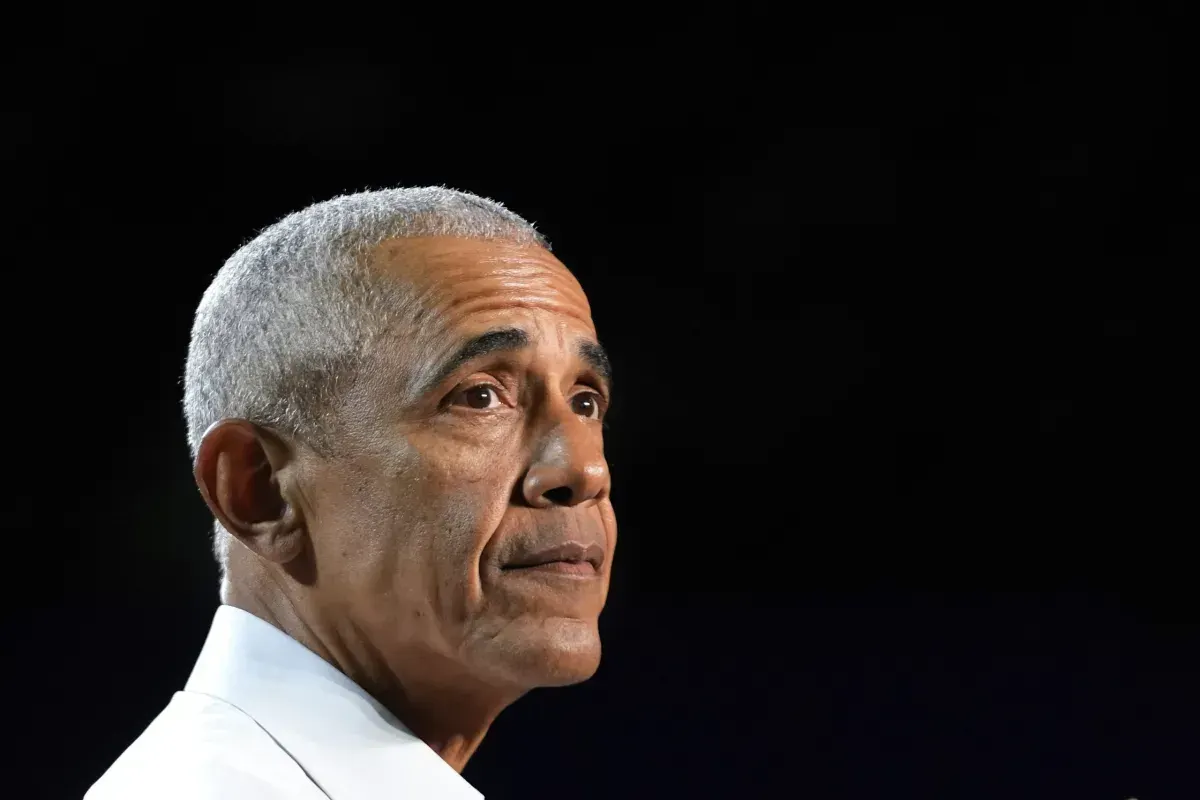
There is something extraordinary about watching America’s first Black president have a public conversation with his ancestors, only for the living to call that otherworldly connection into question.
In a recent episode of former president Barack Obama’s podcast “A Great Book with Barack Obama,” Obama sat down with celebrated author Ta-Nehisi Coates. Coates asked Obama how he believed the writers who shaped his political consciousness would assess him. Coates was referring to Black men and women, who shaped Black America’s rich intellectual tradition, and whose work informed his understanding of race, power and America, James Baldwin, in particular—who the episode was centered around.
“They’re my ancestors. They’re my ghosts,” the former president said, describing an ongoing conversation with Black waymakers who preceded him. “I hear their voices,” Obama said. “They say, ‘Did you do enough? Did you really risk what you should have risked?’” Obama continued, reflecting the ancestors would challenge him even today. “Are you doing as much as you could right now when skies are inflamed?”
For a former president whose public persona has long been defined by restraint, swag and extraordinary rhetorical discipline, it was a rare moment of exposed self-interrogation.
It was also an invitation for some of his most persistent critics to pull up.
On a recent episode of Native Land Pod, hosts Angela Rye, Bakari Sellers and Andrew Gillum considered Obama’s remarks. Sellers described the moment as refreshing, particularly given Coates’s willingness to challenge the former president. Gillum, a former gubernatorial candidate in Florida, too, recognized something unusual in Obama’s willingness to publicly entertain the possibility that his work fell short.
But Rye was considerably less generous.
“President Obama, we love you. The answer is no,” she said, responding to the question of whether Obama had risked enough. She challenged his political engagement since leaving office, questioned the priorities surrounding his presidential library and called for him to become more directly involved in efforts to protect voting rights.
Rye also invoked his relationship with the Congressional Black Caucus, urging him to attend the meetings she stated that he failed to show up for during his presidency. Rye previously served as the CBC’s executive director and general counsel.
The commentator’s critique raises a long overdue question worth examining: When Black Washington insiders assess Obama’s presidential record, where does the institutional critique end and personal grievance begin?
The distinction becomes especially important when criticism is presented as the definitive assessment of a presidency rather than one perspective on it.
Obama’s relationship with the Black political establishment has never been without its fights and bruises.