

 Subscribe

In Conversation: Two Black Brooklyn Mothers On Nikole Hannah-Jones's School Experiment
This installment of "In Conversation" brings two Black mothers together with children in Brooklyn schools. They attempt to make sense of the writer's controversial New York Times Magazine piece.

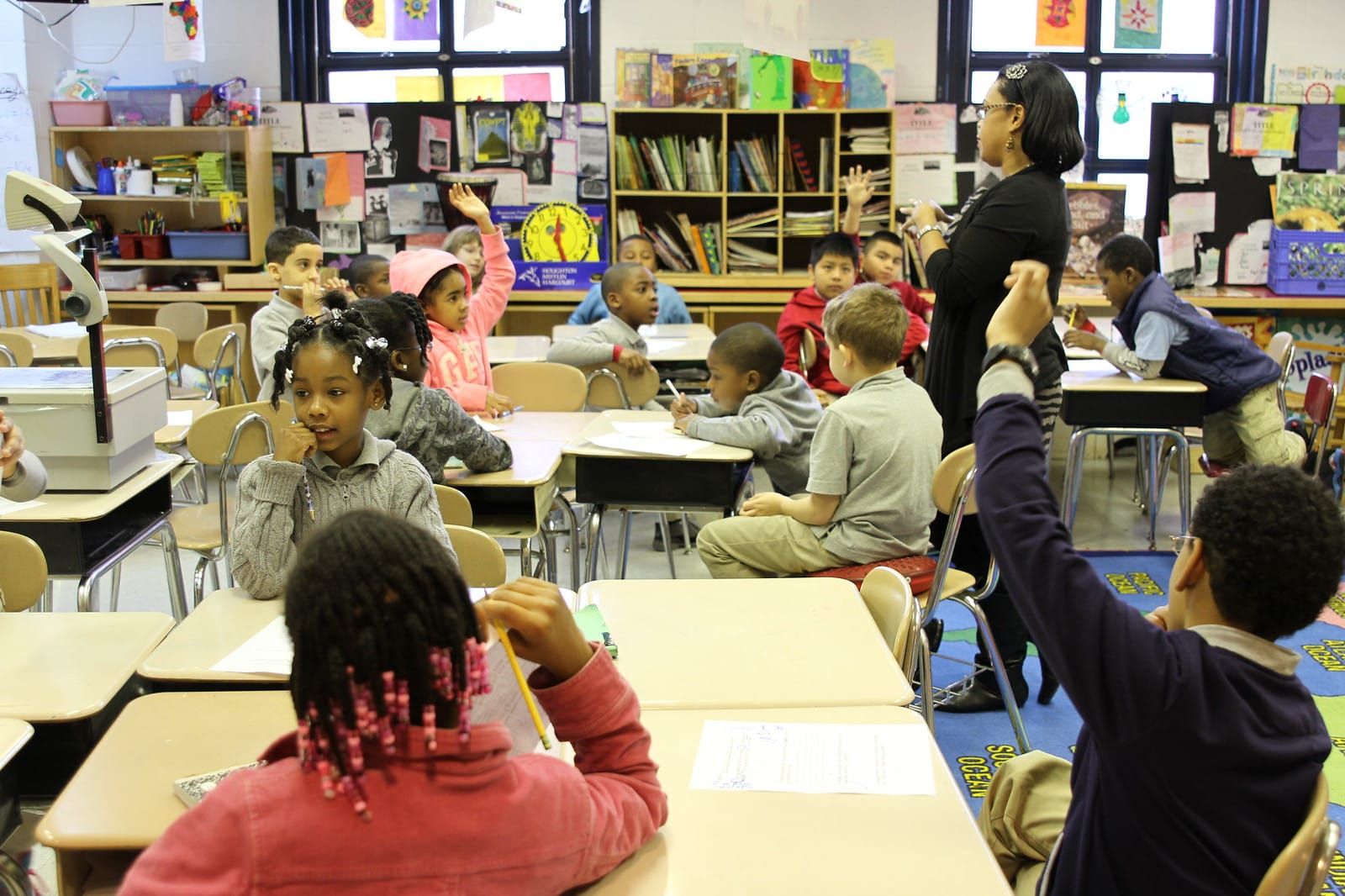
It's been nearly two weeks since Nikole Hannah-Jones wrote about sending her daughter to a high-poverty Brooklyn public school, and the anger her daughter now feels about that choice. The article lit up my parent group chats as Black parents who navigate New York City's schools grappled with leaving a child in a failing school. For us, it wasn't just another round of discourse. It hit too close to home. So I called my friend Veronica*, whose children attend the same majority-Black public school as mine in the heart of Brooklyn. We talked about what the article gets right and why we respect Hannah-Jones's intent but question her approach.
Brandy: The article, girl. I'm sure you've read the commentary, seen the videos, and done all the things. Where do you land now?
Veronica: I've been following Nikole Hannah-Jones for a while. As a former journalist, I've always found her work thorough, fair, and well researched, almost historical. She really gets into the nuts and bolts of a topic. I thought she was brave to take this chance. In retrospect, I think the issue was more the execution. I generally struggle with people who tackle something like New York City's public school system without having grown up here. I'm now closer to 50 than 30, and schools were different here. There's a reason I know a lot of Black and brown people who went to Brooklyn Tech [a highly competitive specialized high school]. When I was in high school, some kids went there and there wasn't a lot of fanfare or preparation. You took the test, and if you passed, you got in.
I really appreciate her honesty in the article, and that she gave her daughter space to be angry. As parents, we don't always let our kids be angry about our choices. But I've always been confused by her choice of school. As a Brooklyn resident, I'm familiar with the schools she named, and they're not even technically in her neighborhood. I was curious why she chose that elementary school for her daughter. Middle school is more of a toss-up.
"As a Black parent, and as a Black person who attended New York City public schools, I don't always feel the potential of Black children is recognized."
I also wondered whether she interacted with the parent community, because there weren't any parent voices in the piece. There weren't really voices from anyone except her and her daughter. I don't know if that was intentional. I don't think every comment about her has been fair. This was her personal choice, her attempt to live out her values, and I'm never going to judge anyone for that. I was just more confused by the elementary school than the middle school, because near where she lives there are several schools that, while maybe not in the same straits, have a similar profile.
Brandy: Both our children go to a pretty well-to-do, Black-majority public elementary school in Brooklyn. What has your experience been with public schools, especially for your three children?
Veronica: I was raised a different borough, so I don't know Brooklyn schools super well. I know them through the lens of being a parent. I chose our school for all my children because, honestly, it was the only one I could really see them at. I wanted their experience to feel like a community, and when I walked through the doors, that's what it felt like. I liked that there was Black leadership. I liked that I saw a lot of Black teachers. The lunch ladies were Black. I felt there would be a commitment to my child's potential. As a Black parent, and as a Black person who attended New York City public schools, I don't always feel the potential of Black children is recognized. It's often underestimated. It's almost like you have to prove you have promise before you're treated like you have any.