

 Subscribe
The Victorian Age
The singer-songwriter evokes the multi-sensory aura of Black pop stars we openly grieve.

In the 1989 sci-fi television series “Quantum Leap,” the main character, physicist Dr. Sam Beckett, played by Scott Bakula, leaps back in time, inhabiting the bodies of other people to correct historical mistakes. Clearly informed by “Back to the Future,” the iconic mid-’80s movie starring Michael J. Fox that brought sci-fi and time travel into the homes of curious young Gen Xers and millennials.
Today on Threads, the new cultural town square, quantum leaping has reemerged in the national consciousness, often taking up residence in conversations as a new methodology, something like a hybrid of manifesting, the use of affirmations, and disciplined action. In these dark times of Trumpian mass unemployment, food insecurity, and global war, quantum leaping is more than ambition, it’s escapist and its own kind of candied revenge.
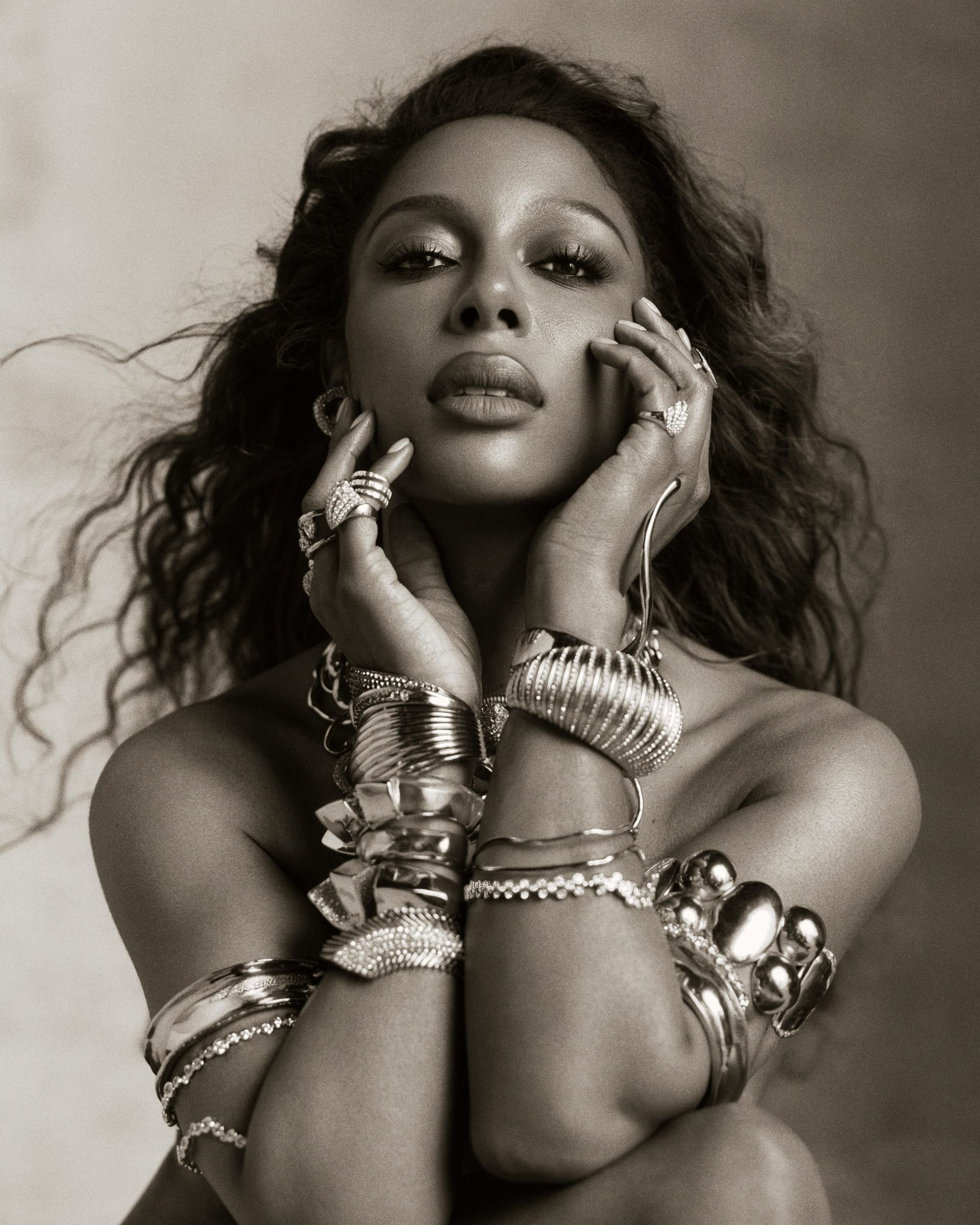
This feels like everything Victoria Monét is doing right now. The singer-songwriter evokes the multi-sensory aura of pop stars we openly grieve.
Ever since Monét released the first installment of “Jaguar,” her 2020 EP and standout single “Moment,” she’s been on a mission, not so secret to those of us paying attention: a transit back in time, like Dr. Beckett, correcting the perilous point when American music decided R&B was no longer enough.
Burial of Top 40 R&B
I timestamp the untimely passing of Michael Jackson as the universal decline of American popular music, certainly star power, in its most honest sense.
But the Black American tradition of R&B music was read its rites much earlier, during the shift from radio to the streaming era, where becoming an R&B star came to mean something different, and managing to reach star-level, unless you’re Adele or Sam Smith, is not at all a thing.
The sweeping devaluation of R&B recalls when “video killed the radio star.” There is no doubt at all, social media killed the music star and viciously slaughtered the R&B star.
Though we’ve seen honorable and often zealous attempts at revivals. Frank Ocean, The Weeknd and SZA managed to push through to mainstream radio and streaming with left-of-center efforts presented over the last decade—surely an inheritance from the generosity of Janet Jackson’s “Velvet Rope,” the origin of the dark R&B sound.
But Black women comparable to Gladys Knight and Patti LaBelle and later Anita Baker and Stephanie Mills—R&B artists who advanced the alto and soprano sections in mass music, or as we say, “the oil”—have virtually disappeared from the top 40—even the R&B charts on iTunes. This is with the exception of Jazmine Sullivan, Ledisi, of course, and most recently Ari Lennox, whose album “Shea Butter,” released just before the pandemic, and gave us the 21st-century improvisational jazz range of Erykah Badu and Billie Holiday.
The enduring dominance of Beyoncé, whose vocal elasticity is often eclipsed by the fantastical seduction of her visual iconography, though her protest anthems counter the pop friendliness of America’s first Black female pop star, Dionne Warwick, and inarguably the commercial diplomacy of Diana Ross and Whitney Houston.
When people say R&B is dead, it’s often received defensively by its active creators. R&B has never stopped breathing. But the fragmented undoing of its chords, riffs, bridges, and melanin from the frontlines of culture remains an immutable fact.
Until Victoria Monét.